Have you ever watched your dog zoom across the park and wondered if you could keep up? Most of us assume dogs are faster — and honestly, we’re usually right. But the full answer might surprise you. While many dogs can easily outrun a human in a short sprint, humans have their own hidden superpower when it comes to running.
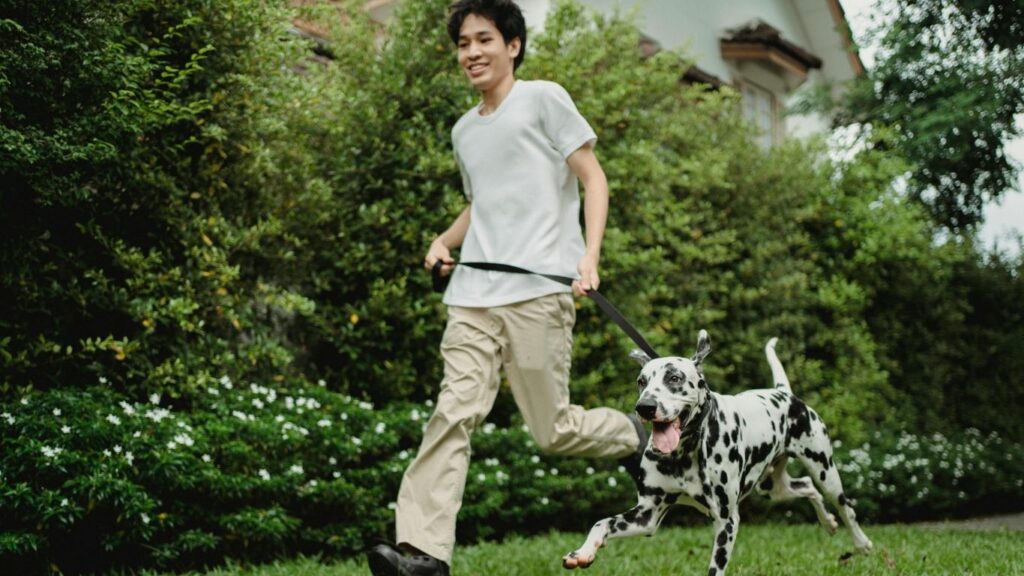
This isn’t just about who wins a race. It’s about how dogs’ bodies are built for speed, why some breeds are slower than you think, and the one area where humans actually shine. Let’s dive into the surprising facts about dog speed.
How fast can dogs run
Dogs can run very fast, but their speed depends on their breed, size, and fitness level. Some dogs are built for speed, while others are better at strength or endurance.For example, the Greyhound is one of the fastest dog breeds in the world and can run up to 45 miles per hour (72 km/h).
Smaller or heavier dogs usually run slower, but most healthy dogs can still run much faster than humans.On average, many pet dogs can run between 15 to 30 miles per hour (24 to 48 km/h).
Active and athletic breeds like the German Shepherd, Border Collie, and Siberian Husky are known for their speed and energy.A dog’s running speed also depends on factors like age, health, training, and weather conditions. Young and healthy dogs usually run faster than older dogs.
Human vs Dog — who wins the race
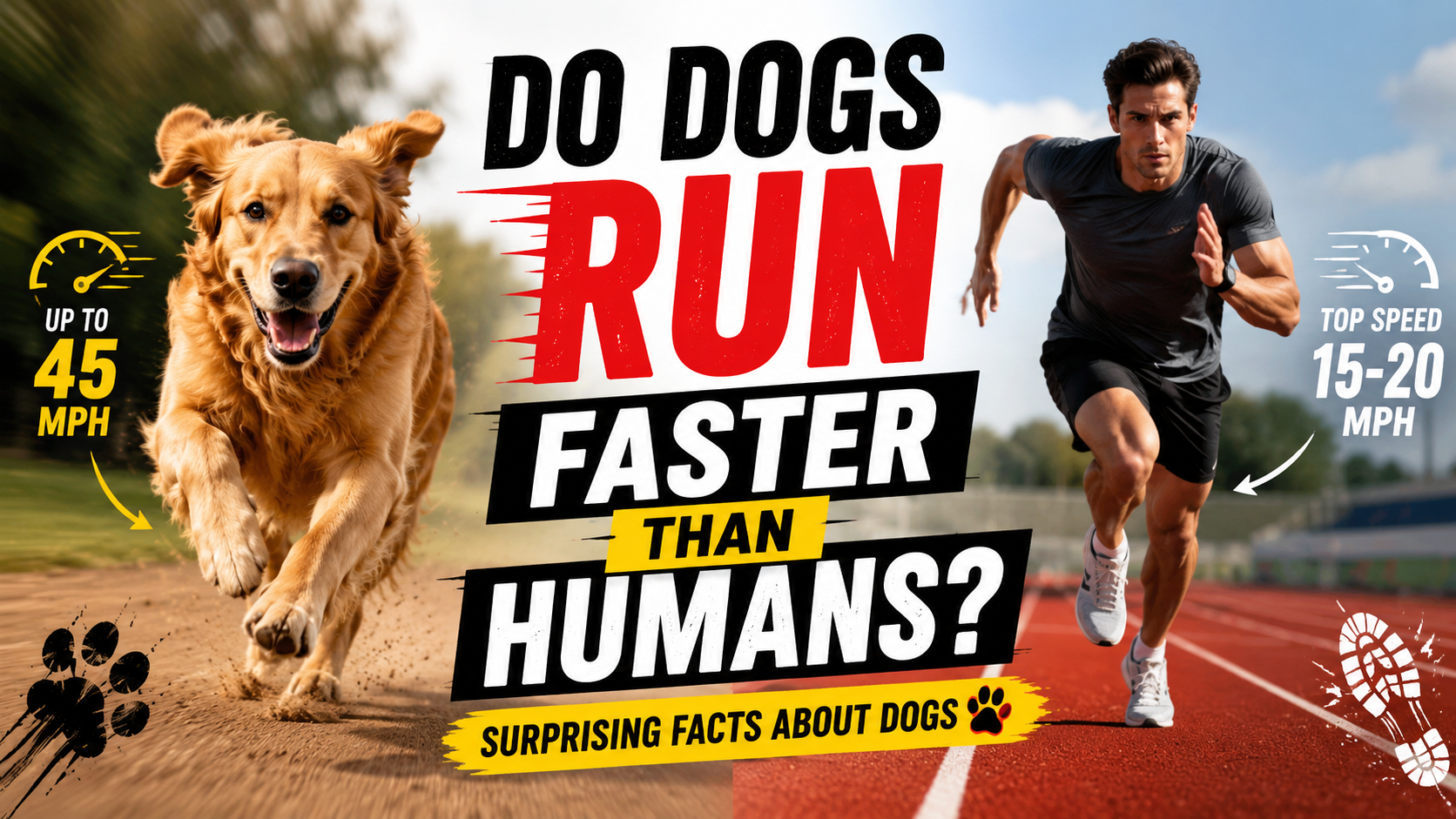
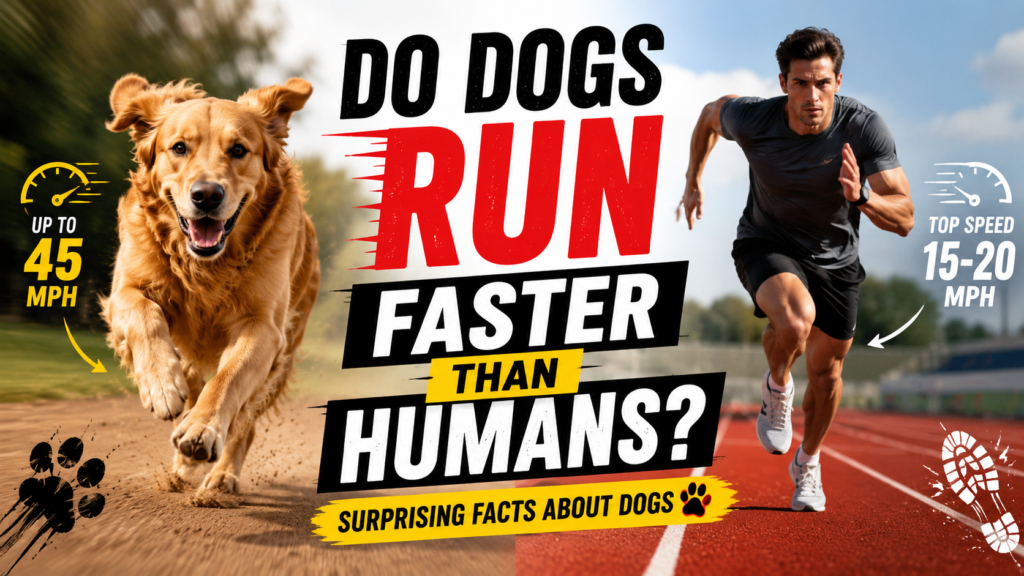
If you’ve ever tried to outrun a dog at the park, you already know the answer — they leave us far behind! The average human runs around 8 to 10 mph in daily life, while a fit athlete like Usain Bolt peaked at 28 mph. Impressive, right? But most dogs can easily hit 15 to 20 mph without even trying hard.
Breeds like the Greyhound can reach an incredible 45 mph, making them one of the fastest animals on the planet. Even your friendly Golden Retriever or Labrador can comfortably outpace the average person.

The main reason? Dogs run on four legs, which gives them a natural mechanical advantage — more power, better balance, and a longer stride cycle. So in a straight-up race between a human and a dog, the dog wins almost every single time. The only exception might be long-distance endurance running, where humans actually have a surprising edge.
Dogs’ sense of smell
If there’s one thing that truly sets dogs apart from humans, it’s their extraordinary sense of smell. While we rely mostly on our eyes to understand the world around us, dogs experience everything through their nose.
A dog’s nose contains around 300 million scent receptors, compared to just 6 million in humans. That’s a staggering difference! This means a dog can detect smells roughly 10,000 to 100,000 times better than we ever could. Ever wonder why dogs sniff everything on a walk?
They’re basically “reading the newspaper” — gathering information about other animals, people, and even emotions nearby. Dogs can smell fear, illness, and stress in humans. In fact, trained dogs can detect certain cancers, low blood sugar, and even seizures before they happen. Their nose isn’t just powerful — it’s practically a superpower. It’s one of nature’s most impressive biological gifts.
Do dogs really understand human emotions
If you’ve ever cried and noticed your dog quietly coming to sit beside you, you already know there’s something special going on. But the question is — do dogs actually understand what you’re feeling, or are they just reacting to your behavior?
Research suggests that dogs are surprisingly good at reading human emotions. They can pick up on facial expressions, tone of voice, and even body language to figure out how you’re feeling.
Studies have shown that dogs respond differently to happy faces versus angry ones — and they tend to approach people who seem calm and friendly.What makes dogs unique is that they’ve spent thousands of years living alongside humans. Over time, they’ve developed a natural ability to tune into our emotional state.
Your dog isn’t just guessing — they’re genuinely paying attention to you.So yes, your dog probably does understand when you’re sad, happy, or stressed. They may not speak your language, but emotionally? They’re listening more than you think.
Do dogs dream while sleeping? Understanding dogs’ sleep and dreams
Have you ever watched your dog sleeping and wondered what’s going on inside their little head? It’s one of those questions that many dog owners ask, and the answer is actually quite fascinating.
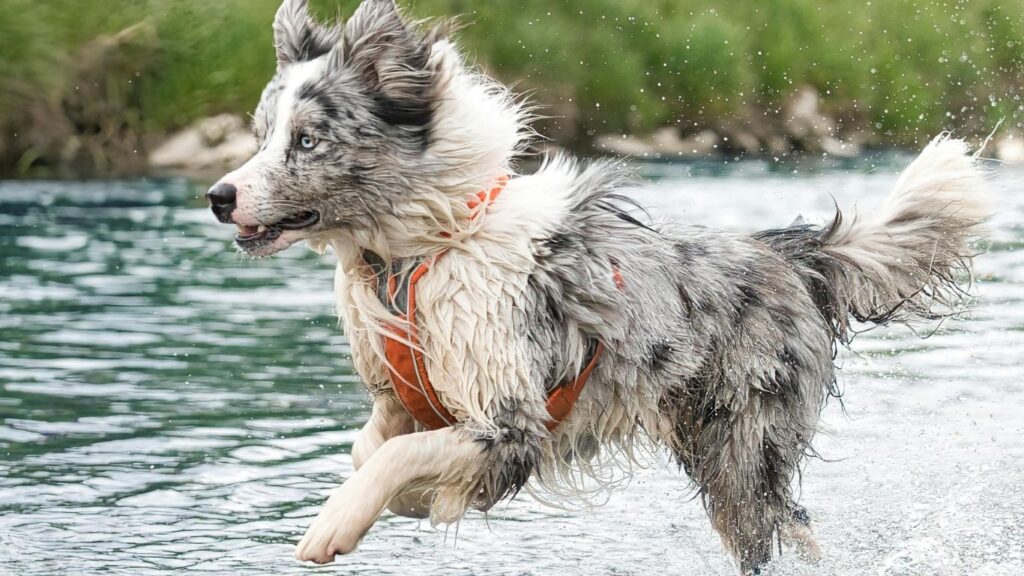
Just like humans, dogs do dream while they sleep. Scientists have studied dog sleep patterns and found that dogs go through similar sleep cycles to us, including REM (Rapid Eye Movement) sleep — and that’s exactly when dreaming happens.
During REM sleep, you might notice your dog twitching, moving their paws, or even making soft sounds. This is completely normal and means they are likely dreaming about their daily experiences — maybe chasing a ball or playing in the park.
Smaller dogs tend to dream more frequently than larger dogs, while larger breeds have longer dreams.Puppies and older dogs dream more often than adult dogs because their brains are processing a lot of information. So next time your dog looks restless while sleeping, just smile — they’re probably having a great adventure in their dreams!
Unique qualities of different dog
Every dog breed is special in its own way. Some dogs are built for speed, some for strength, and some just for being the best couch companion you could ask for.
A Greyhound can hit speeds of around 45 mph, making it one of the fastest dog breeds on the planet — far beyond what any human can run. Border Collies, on the other hand, are not just fast but incredibly smart, often used for herding because they think and react quickly.
Golden Retrievers are known for their gentle nature and loyalty, making them perfect family dogs. Then you have Huskies, bred for cold climates and long-distance sled pulling — built for endurance more than speed.
Even small breeds like Chihuahuas carry big personalities. The truth is, no two breeds are exactly alike. Each one has been shaped over hundreds of years for a specific purpose, and that is what makes dogs such fascinating and diverse animals.
Conclusion — Dogs are more than pets, they’re true friends
Yes, dogs are faster than most humans — but that is honestly the least interesting thing about them. What truly sets dogs apart is the way they make us feel. They possess a natural ability to read our emotions without us having to say a single word.
Had a rough day? Your dog already knows. Feeling lonely at midnight? They will quietly sit right next to you. No judgment, no complaints, just pure and simple presence. Humans have shared their lives with dogs for thousands of years, and that relationship was really about speed or strength, as it was always about trust.
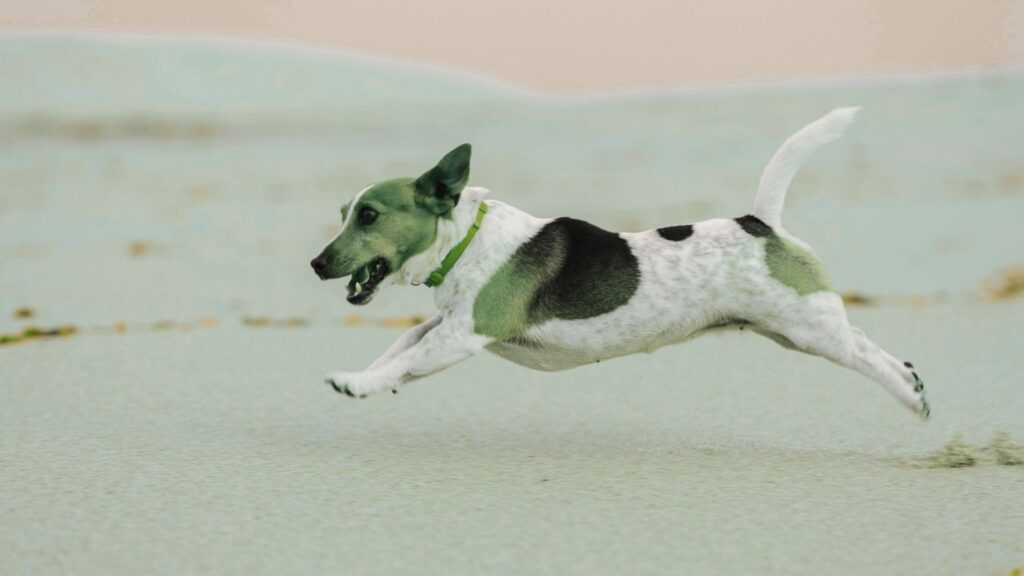
A dog gives you everything they have, every single day, without expecting much in return. So whether you own a dog or simply admire them from a distance, one thing is certain — dogs make this world a much warmer and kinder place to live in.
FAQ
Even the fastest human can’t outrun many dogs. Usain Bolt reached an incredible speed of about 45 km/h, but many dogs naturally run faster. Regular dogs can often reach 50 km/h or more, while speedy breeds like the Greyhound can sprint up to 70 km/h. That means in a real race, most medium and large dogs would easily leave humans behind. Dogs truly are built for speed and quick movement!
The Greyhound is the fastest dog in the world, reaching speeds up to 45 mph — built for pure speed with a lean body and long legs. Next comes the Saluki, an ancient breed that can hit around 42 mph and is known for incredible endurance too. Third is the Afghan Hound, clocking around 40 mph, which is surprising given its gorgeous long coat! All three are natural-born runners with sleek, athletic builds.
Yes, dogs can absolutely hear you! In fact, their hearing is much more powerful than ours. Dogs can hear sounds from nearly 4 times farther away than humans. They can also detect higher-pitched frequencies that we can’t even notice.That’s why your dog reacts when you call their name, use a specific tone, or even whisper softly. They don’t just hear your words — they also pick up on your emotions through your voice tone.
The Least Wanted Dog Breeds in shelters are usually:Pit Bulls – Due to their tough reputation and breed bans in many places.Black Dogs – People tend to overlook them (called “Black Dog Syndrome”).Older Dogs – Most people prefer puppies.Large Mixed Breeds – Hard to rehome due to size and space concerns.Sadly, these dogs are loving and loyal — they just need someone to give them a chance!
Read Other Also
- Hardest Dogs to Take Care Of for Beginners – Breeds That Can Be Very Challenging

- Top Hardest Dogs to Adopt in 2026 – Why These Dogs Struggle to Find Homes

- Do Dogs Run Faster Than Humans? Surprising Facts About Dog
- Top10 strongest dog in the world 2026
- Afghan hound dog pros and cons: the good, the gorgeous, and the stubborn

- Afghan hound health problems hidden risks most owners ignore

- Why are akitas banned? Truth, myths, and what most people get wrong
- Top 10 Beagle Pros and Cons for Families, First-Time Owners & Kids

- Why are akitas a restricted breed
- American bulldog breed health issues